The Vineland Assessment (Vineland-3) is used to measure a child’s adaptive behavior, or how they function in everyday life. It evaluates key areas like communication, social skills, and daily living abilities. Clinicians use it to identify strengths and areas of need, guide treatment planning, and track meaningful progress over time – especially for children receiving ABA therapy.
Contact Us Today to Get Started
Your information below will help us instantly match you with one of our expert intake advocates.
What Is the Vineland Assessment?

The Vineland Adaptive Behavior Scales (Vineland-3) is one of the most widely used tools to measure how children grow in everyday life skills.
Instead of testing academic ability, it focuses on what matters most to families:
- How your child communicates
- How they interact with others
- How they manage daily routines
In simple terms, the Vineland helps answer:
“Is my child becoming more independent and able to navigate the world?”
What Does the Vineland Measure?
The Vineland looks at three core areas of development. These areas then combine into an overall Adaptive Behavior Score, which tracks your child’s progress over time.
Communication
- Expressing wants and needs
- Understanding language
- Using words, gestures, or devices
Social Skills
- Playing and interacting with others
- Building relationships
- Understanding social cues
Daily Living Skills
- Eating, dressing, hygiene
- Following routines
- Increasing independence at home and school
How Is the Vineland Done?

The Vineland is not a test your child “takes.”
Instead, it’s a structured conversation between a clinician and a parent or caregiver.
We ask questions like:
- “Does your child ask for help when needed?”
- “Can they follow simple instructions?”
- “How do they interact with others?”
This approach ensures the results reflect real-world behavior, not just what happens in a clinic.
How to Understand Your Child’s Score
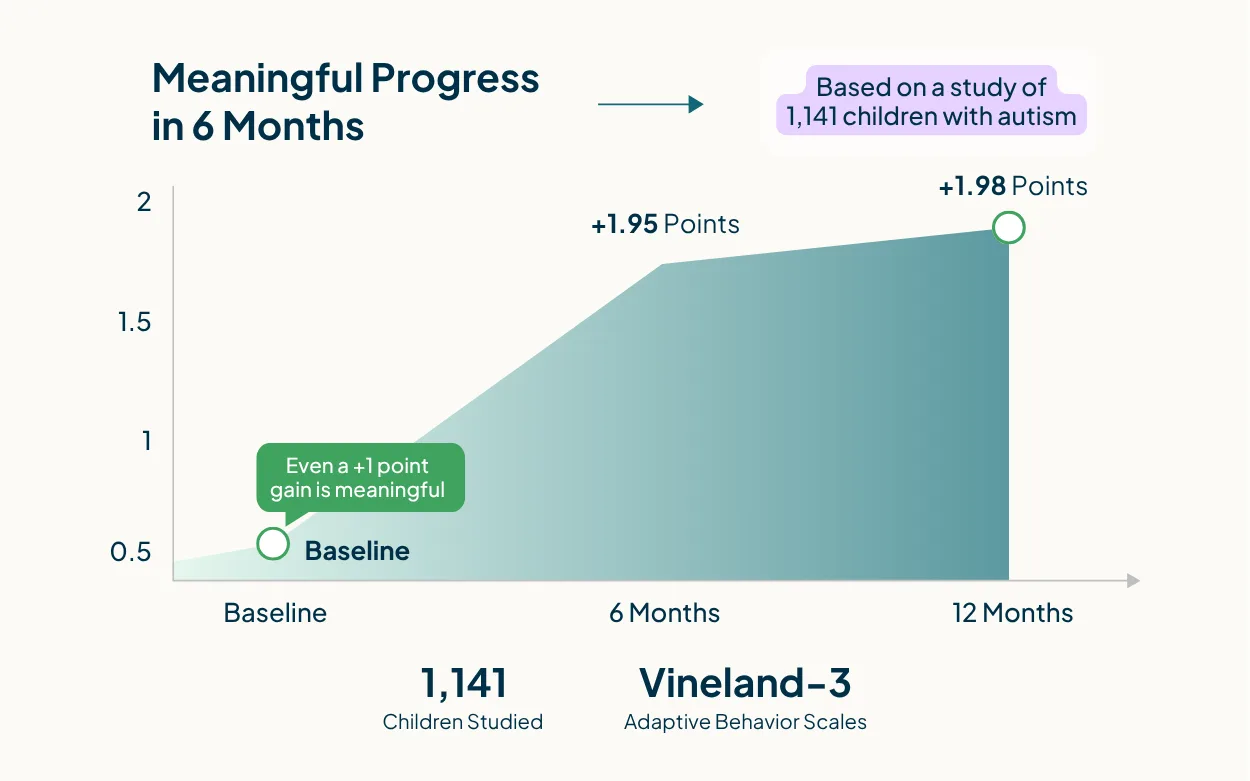
Vineland scores are standardized, with an average around 100. Lower scores simply highlight areas where your child may need additional support.
But what matters most isn’t the number itself. It’s how that number evolves over time.
This is where progress becomes meaningful.
As shown here, children in our study demonstrated measurable improvement within just 6 months, with continued growth at 12 months. Even small gains add up:
- +1 point is considered clinically meaningful
- At 6 months, children improved by an average of +1.95 points
- By 12 months, progress reached +1.98 points
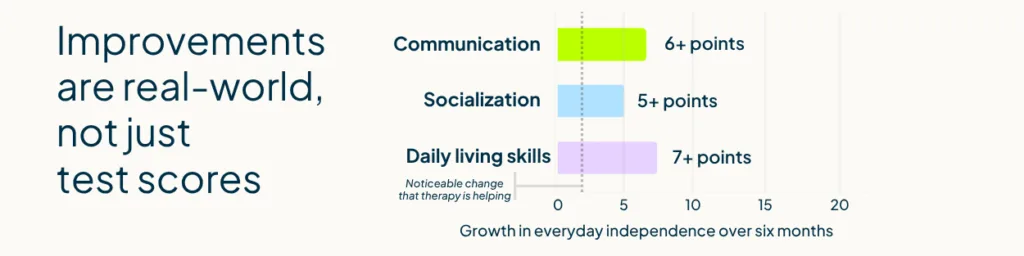
These aren’t just statistics. Each point reflects real-life changes. Like using clearer communication, smoother daily routines, and more engagement with others.
Consistent growth is the signal that your child is building the skills that matter most.
View proven ABA therapy results
What Progress Looks Like Over Time
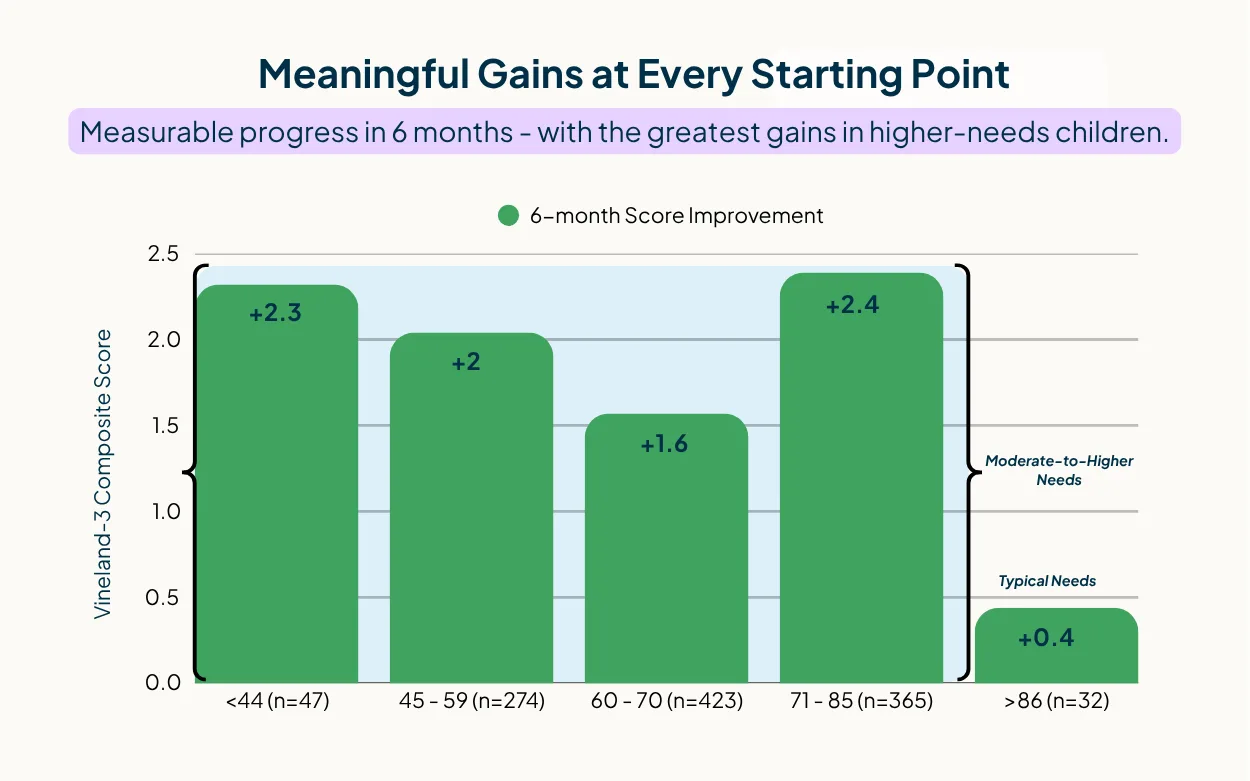 We analyzed outcomes from 1,100+ children receiving ABA therapy, tracking their Vineland scores over 12 months.
Key takeaway: Children improved across every age group – with the greatest gains seen when therapy starts early.
Improvements in Vineland scores reflect growing independence in everyday life.
See the impact of starting early
Consistent, Measurable Results
Our outcomes come from a standardized, data-based care model. We use it the same way in every center and confirm progress using real-world skill measures. We combine clinical best practices, advanced training, continuous data tracking, and structured oversight to deliver reliable progress for every child.
Vineland Assessment FAQs
Disclaimer: This outcomes study is based on a retrospective analysis of children receiving ABA therapy at Behavioral Innovations. Results reflect average changes measured using the Vineland Adaptive Behavior Scales (Vineland-3) over 6–12 months. Individual results may vary based on factors such as age, baseline skill level, therapy intensity, and individual needs. While improvements observed were statistically and clinically meaningful, outcomes are not guaranteed and should not be interpreted as typical for every child.