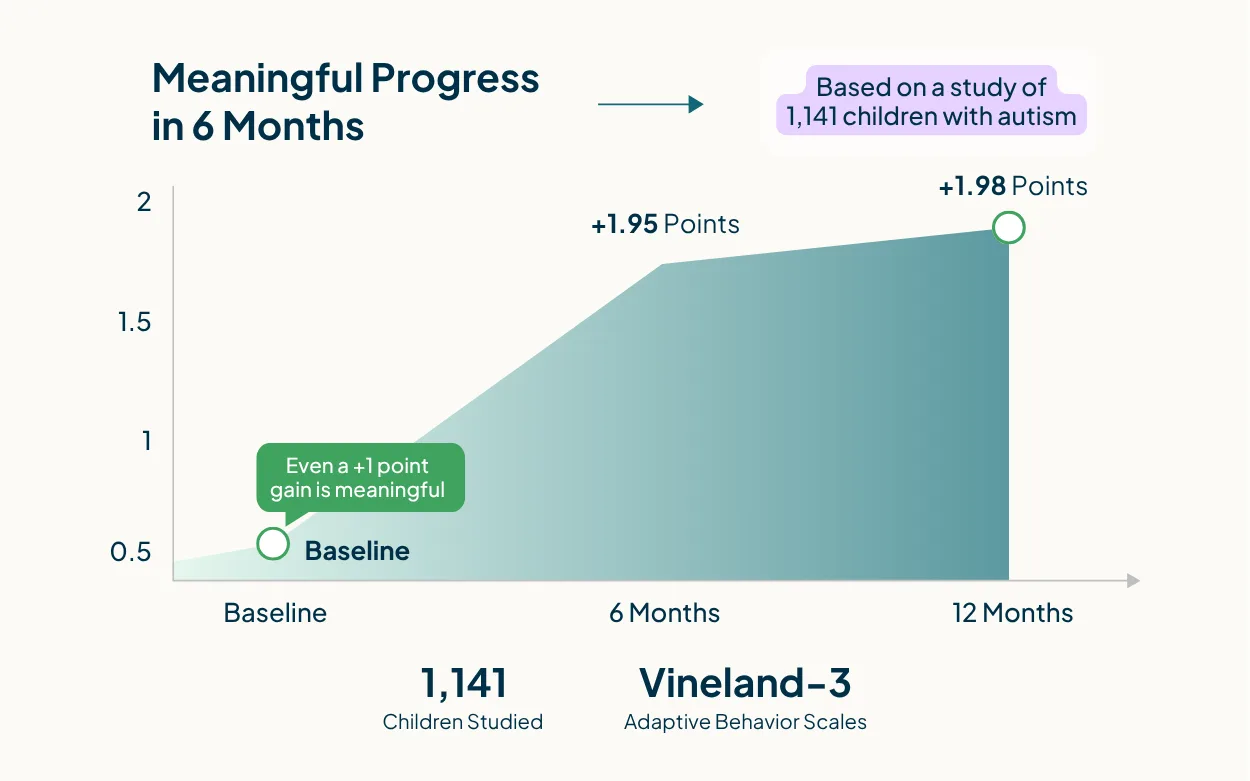
Most children in our outcomes study showed measurable progress within the first 6 months of ABA therapy. Early improvements typically appear first in communication and behavioral regulation, with continued gains building through 12 months and beyond. Progress varies by child, but consistent, individualized therapy produces steady development over time.
Contact Us Today to Get Started
Your information below will help us instantly match you with one of our expert intake advocates.
Measured Progress in Communication, Independence, and Everyday Life Skills – Backed by Real Data and Clinical Expertise.
At Behavioral Innovations, we track progress the way it should be tracked – clearly, consistently, and in ways that matter to families. We tracked 1,141 children across our programs and measured exactly how much – and in what ways – using a nationally recognized assessment tool. Here’s what we found.
- 1,141 children studied
- Outcomes tracked using Vineland-3 standardized assessments
- Meaningful progress measured within 6 months
- Gains seen across all ages and support levels
Even small gains matter. In standardized assessments, just a +1 point improvement is considered clinically meaningful.
Children studied
1,141
Standardized Assessments
Early Start Gains
+20.3
Progress at Age 2
High Growth
+12.3
Results Across All
How We Measure ABA Therapy Outcomes
Behavioral Innovations measures ABA therapy outcomes using the Vineland Adaptive Behavior Scales, Third Edition (Vineland-3) – a nationally recognized standardized assessment that tracks how children function in real-world situations, not just during therapy sessions. Progress is measured in communication, social interaction, and daily living skills across three domains.
Most assessments measure what a child can do in a clinical setting. The Vineland-3 measures what a child actually does in everyday life – at home, during routines, with family and peers. That’s a meaningful distinction. A child who can follow an instruction in a therapy room but still can’t communicate a need at the dinner table hasn’t made the kind of progress that matters most.
The Vineland-3 tracks three core adaptive behavior domains:
Communication
How a child expresses their needs, understands language, and uses words, gestures, or other means to connect with others.
Social interaction
How a child engages with family members, peers, and others – including play, turn-taking, and reading social situations.
Daily living skills
How independently a child manages everyday tasks – dressing, eating, following routines, and functioning at home.
On the Vineland-3 scale, a gain of just +1 point is considered clinically meaningful. This is a high-resolution tool – small numbers represent real, observable changes in a child’s daily life. The gains BI children showed are measured against this standard.
What Our Outcomes Study Found
Measurable progress within 6 months – across all starting points
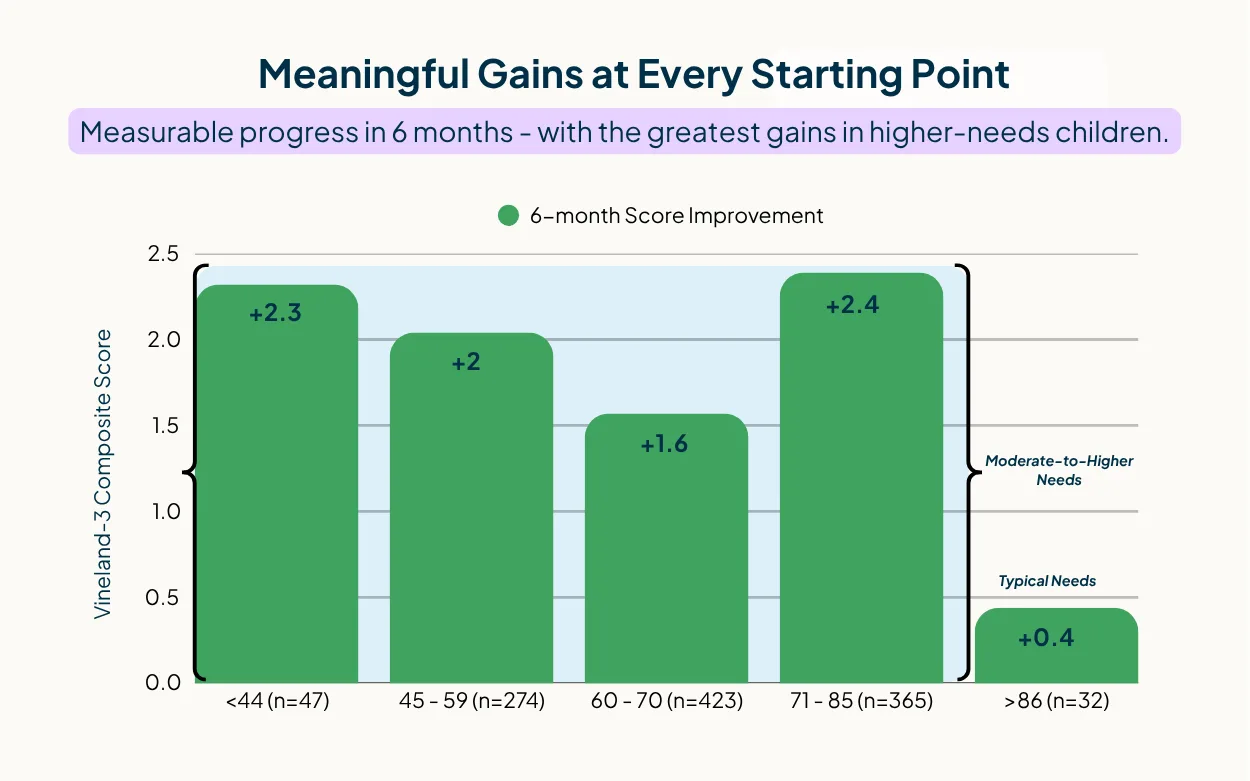
Children across all initial skill levels showed meaningful gains within the first six months of ABA therapy. This is significant because it demonstrates that progress is not limited to children who enter therapy with stronger baseline skills. Children with higher support needs – who enter therapy with lower adaptive behavior scores – showed consistent improvement as well.

Progress in just six months
- Measurable improvement within months
- Growth in communication and behavior
- Early signs families can see at home

Start early, gain more
- Biggest gains seen at age 2
- Over 20-point improvement in key skills
- Early therapy drives faster progress
Results for high needs
- Strong progress for moderate support needs
- Meaningful gains across skill areas
- Consistent improvement over time
Real Change at Home
- Better communication with family
- Improved social interaction
- Increased independence in daily life
What This Means for Your Child
For many families, progress means:
- Saying first words or communicating needs clearly
- Playing and engaging more with others
- Completing everyday routines with less support
- Fewer moments of frustration or challenging behavior
Even small improvements can have a meaningful impact. In standardized assessments, just a +1 point gain is considered clinically meaningful.

Why Starting Early Matters
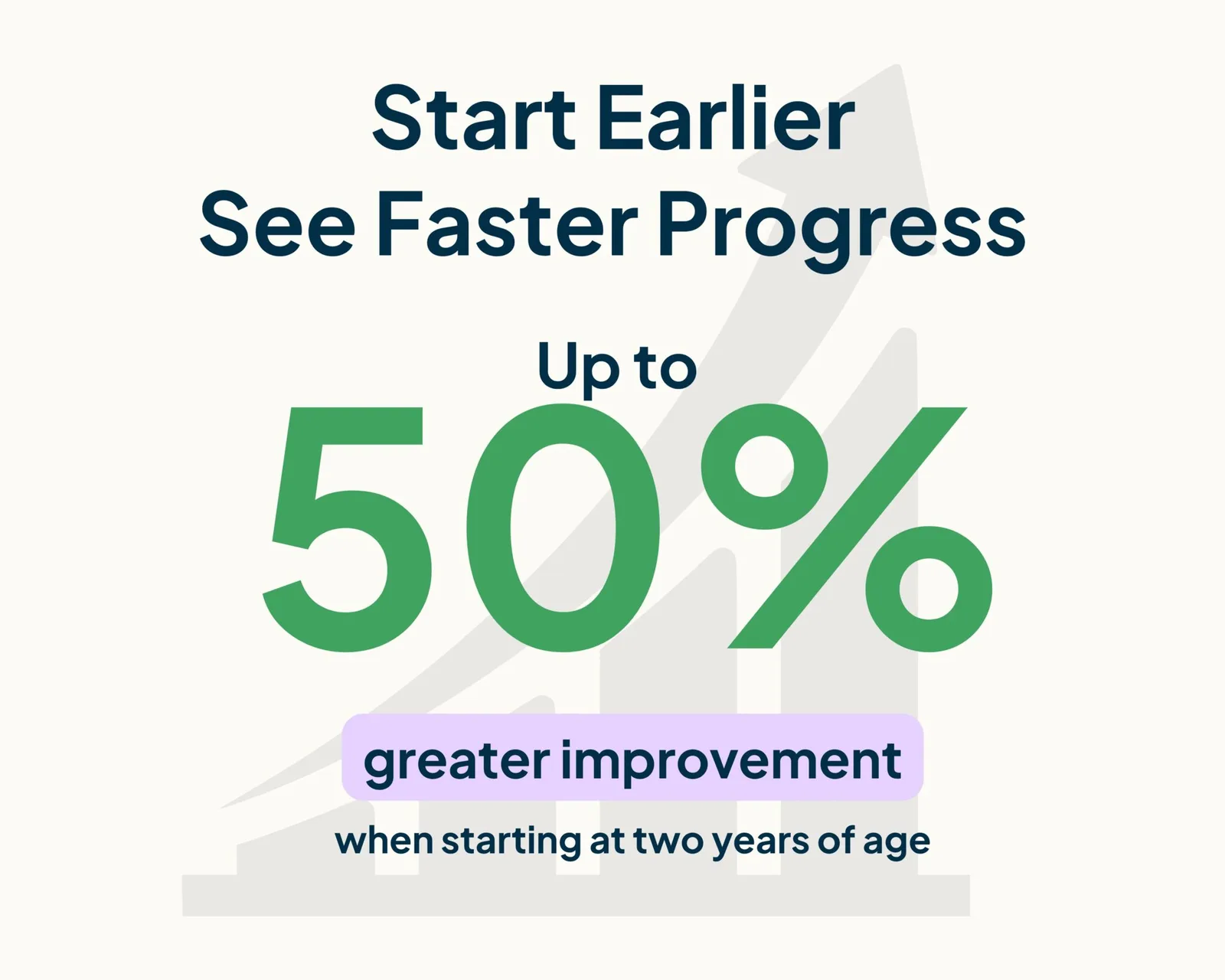
The biggest gains happen at age 2 – a +20.3 point improvement.
Children who begin ABA therapy earlier see the biggest gains in communication, social skills, and independence.
- Faster development of communication skills
- Stronger social engagement at a younger age
- Greater independence in everyday routines
- More opportunity for long-term growth
+12.3 point average gains across all children studied
Across all 1,141 children in the study – regardless of age, starting skill level, or support needs – the average improvement on the Vineland-3 composite score was +12.3 points. This is more than twelve times the threshold for clinical significance on this assessment.
Stronger Progress Where It Matters Most
Children with higher support needs show strong, consistent progress
A common concern among parents of children with more significant support needs is whether ABA therapy will produce meaningful gains for their child specifically. BI’s data shows it does. Children with moderate to higher support needs – measured by lower initial Vineland-3 scores – showed meaningful improvement across all three domains, with some showing the largest individual gains in the study.
What this means for you as a parent
ABA therapy is not only effective for children who are mildly affected. The structured, individualized nature of ABA – with BCBA oversight, data collection every session, and goals adjusted in real time – is specifically designed to work for children with more complex needs. The outcomes data backs this up.
Does ABA Therapy Actually Work?
Yes. ABA therapy is one of the most extensively researched interventions for autism spectrum disorder, and Behavioral Innovations’ internal outcomes data across 1,141 children confirms what the broader research shows: children make measurable, meaningful gains in communication, social skills, and daily living skills – most within the first six months of consistent therapy.
- Many families notice meaningful changes within the first six months
- Progress builds over time, with continued growth after a full year of therapy
- Children at different ages and needs levels all show improvement in their own way
This isn’t just about data – it’s about your child communicating more, connecting more, and gaining their independence.
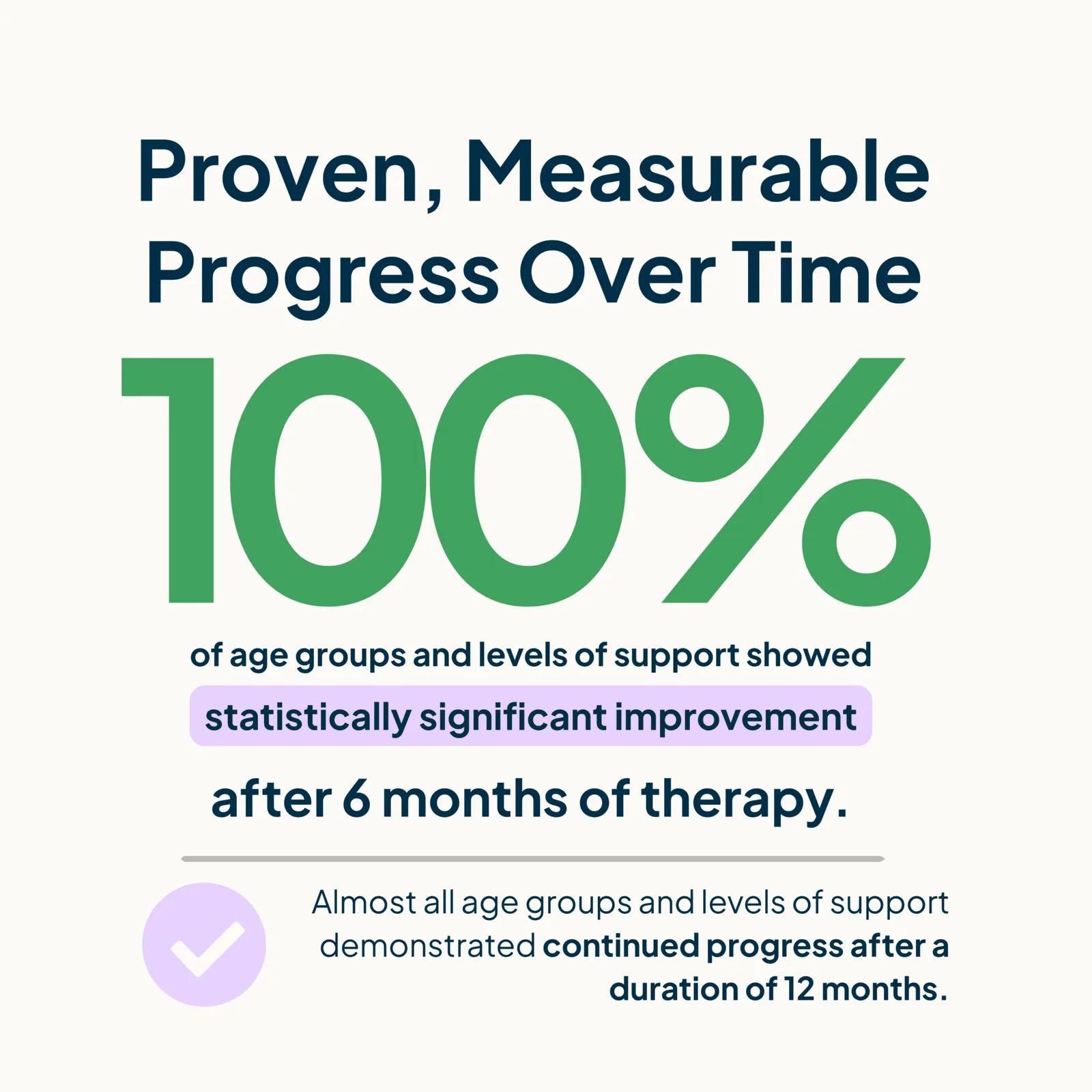
Results You Can Trust
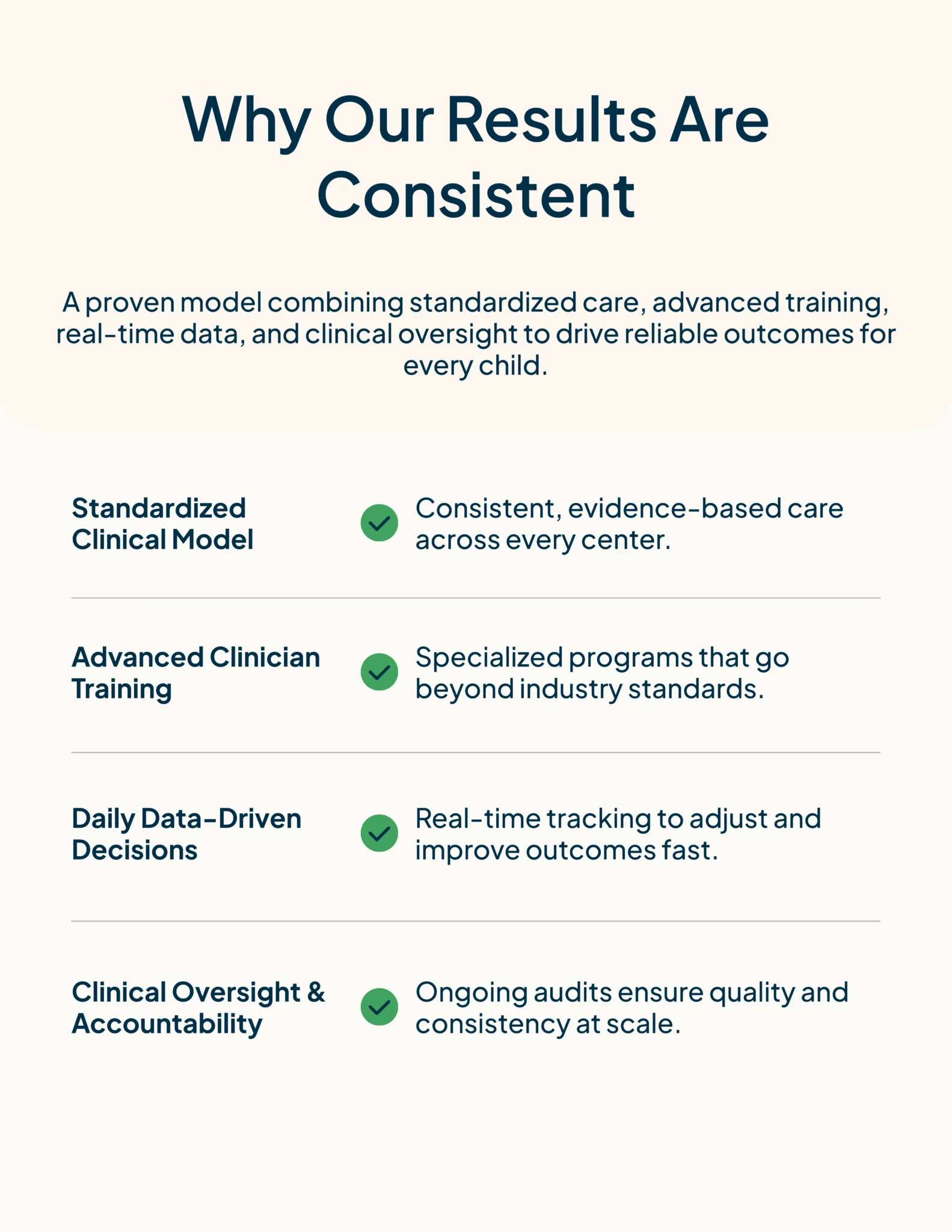
ABA therapy is one of the most widely researched and recommended treatments for autism, helping children improve communication, behavior, and independence. At Behavioral Innovations, we combine this evidence-based approach with individualized care to deliver meaningful, measurable outcomes.
Common Questions About ABA Therapy Outcomes
What Progress Looks Like from a Parent’s Perspective

The team has been incredibly supportive, patient, and knowledgeable from day one. They truly care about each child’s progress and make families feel heard and…
The team has been incredibly supportive, patient, and knowledgeable from day one. They truly care about each child’s progress and make families feel heard and included every step of the way. I’ve already seen positive growth in my son, and I’m so grateful for their dedication and compassion. Highly recommend to any family starting their autism journey!
Susan O April, 2026
Behavioral Innovations is one of the best decisions I’ve made for my son. I was very nervous leaving my then non verbal child somewhere for…
Behavioral Innovations is one of the best decisions I’ve made for my son. I was very nervous leaving my then non verbal child somewhere for the first time but this center has helped our family so much. I feel the staff really cares about my child and uses techniques that cater to his way of learning and making it fun while and also supporting me as a parent! He has come a long way, grown so much and now does things I wasn’t sure he would be able to thanks to Behavioral Innovations.
Talia M April, 2026
Behavioral Innovations has changed my family’s lives! My son has been going for 2 years, and it has made the biggest difference. He loves going,…
Behavioral Innovations has changed my family’s lives! My son has been going for 2 years, and it has made the biggest difference. He loves going, and it has been amazing to see all the growth and progress he has made. All the staff are wonderful – friendly front desk and amazing the therapists who truly care about the kids. Highly recommend!
Jessica K April, 2026
The staff here are absolutely phenomenal with my son and have helped him in many ways. Even though it has only been a few months,…
The staff here are absolutely phenomenal with my son and have helped him in many ways. Even though it has only been a few months, he has grown so much and continues to learn new things every day! The positivity in this center is hands down one of the best things about them. Any questions or concerns I have they answer quickly and efficiently. Huge shout out to the BI team!
Shelby B April, 2026
The care provided at BI is truly exceptional. They consistently offer personalized attention to every individual, demonstrating a deep and genuine care for each child…
The care provided at BI is truly exceptional. They consistently offer personalized attention to every individual, demonstrating a deep and genuine care for each child receiving their services. From the front office staff, to everyone in the back you can tell they love what they do.
Mayra B April, 2026
Having a child with autism takes a village and I can gladly say everyone here at BI is family. My son has been here a…
Having a child with autism takes a village and I can gladly say everyone here at BI is family. My son has been here a little over a year and it has been amazing every step of the way! Since the day I stopped by to check out the center the center administrator was there to greet me with the biggest smile and welcoming energy! From that day forward I knew this is where we were supposed to be! The communication here is great and they are always keeping me updated on all the amazing things my son is achieving. I honestly don’t know where I’d be without the amazing love and support from the team here at Behavioral innovation.
Alyssa G April, 2026
Behavioral Innovations has been an amazing place for my toddler. Since attending daily, he has made so much progress in both communication and overall skills.…
Behavioral Innovations has been an amazing place for my toddler. Since attending daily, he has made so much progress in both communication and overall skills. He went from being nonverbal to now expressing himself in ways we once thought would take much longer. The staff is patient, supportive, and truly dedicated to each child’s growth. I’m so grateful for the positive impact they’ve had on his development. Thank you to the staff & BI RBT’s and BCBA for your service & support!! I definitely recommend to any parents who wants their child to thrive!!!
Aileen C April, 2026
My boys feel so safe and taken care of at behavioral innovations. They are constantly learning how to overcome challenges and gaining skills that help…
My boys feel so safe and taken care of at behavioral innovations. They are constantly learning how to overcome challenges and gaining skills that help them in everyday life. We truly appreciate the above and beyond care the staff at behavioral innovations provides.
Jenna V April, 2026
My son has been attending Behavioral Innovations for 2 years now and we couldn’t have chosen a better place for him to attend therapy! Everyone…
My son has been attending Behavioral Innovations for 2 years now and we couldn’t have chosen a better place for him to attend therapy! Everyone here is great, from the BCBAs to the RBTs. We recommend Behavioral Innovations to anyone who is starting their ABA journey or looking for a change!
Monica M March, 2026
I am so grateful to this ABA therapy clinic because I have seen significant changes in my little one. I truly see him growing steadily…
I am so grateful to this ABA therapy clinic because I have seen significant changes in my little one. I truly see him growing steadily and as an extension of home, because through the care, security, and empathy of their qualified staff, my son has been improving more and more each day!
Ana M March, 2026
Disclaimer: This outcomes study is based on a retrospective analysis of children receiving ABA therapy at Behavioral Innovations. Results reflect average changes measured using the Vineland Adaptive Behavior Scales (Vineland-3) over 6–12 months. Individual results may vary based on factors such as age, baseline skill level, therapy intensity, and individual needs. While improvements observed were statistically and clinically meaningful, outcomes are not guaranteed and should not be interpreted as typical for every child.