Personalized Care. Local Centers. No Waitlists.

Does ABA Therapy Work? Real Results for Children with Autism

Learn whether ABA therapy works for children with autism. See real outcomes data, how progress is measured, and what results families can expect over time.

Most Major Insurance Accepted.
Flexible Financing Options
Over 120 Locations

Contact Us Today To Get Started

Your information below will help us instantly match you with one of our expert intake advocates.

How We Measure Whether Therapy is Working

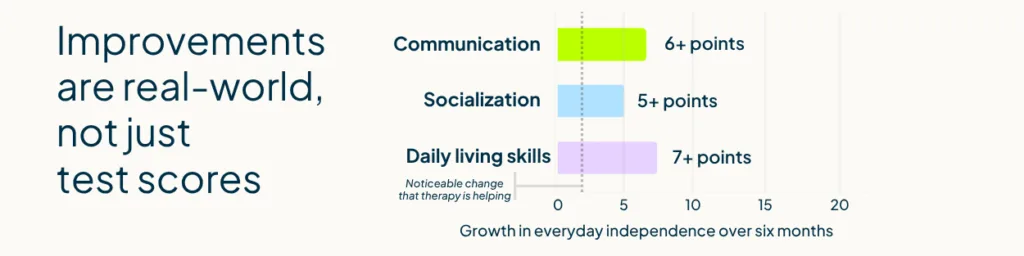
Progress is measured using the Vineland Adaptive Behavior Scales (Vineland-3), a nationally recognized assessment that evaluates how children function in everyday life. This allows us to track progress in a way that reflects real-world improvement, not just performance during therapy sessions.
See how we measure progress

Built for Consistent, Measurable Progress

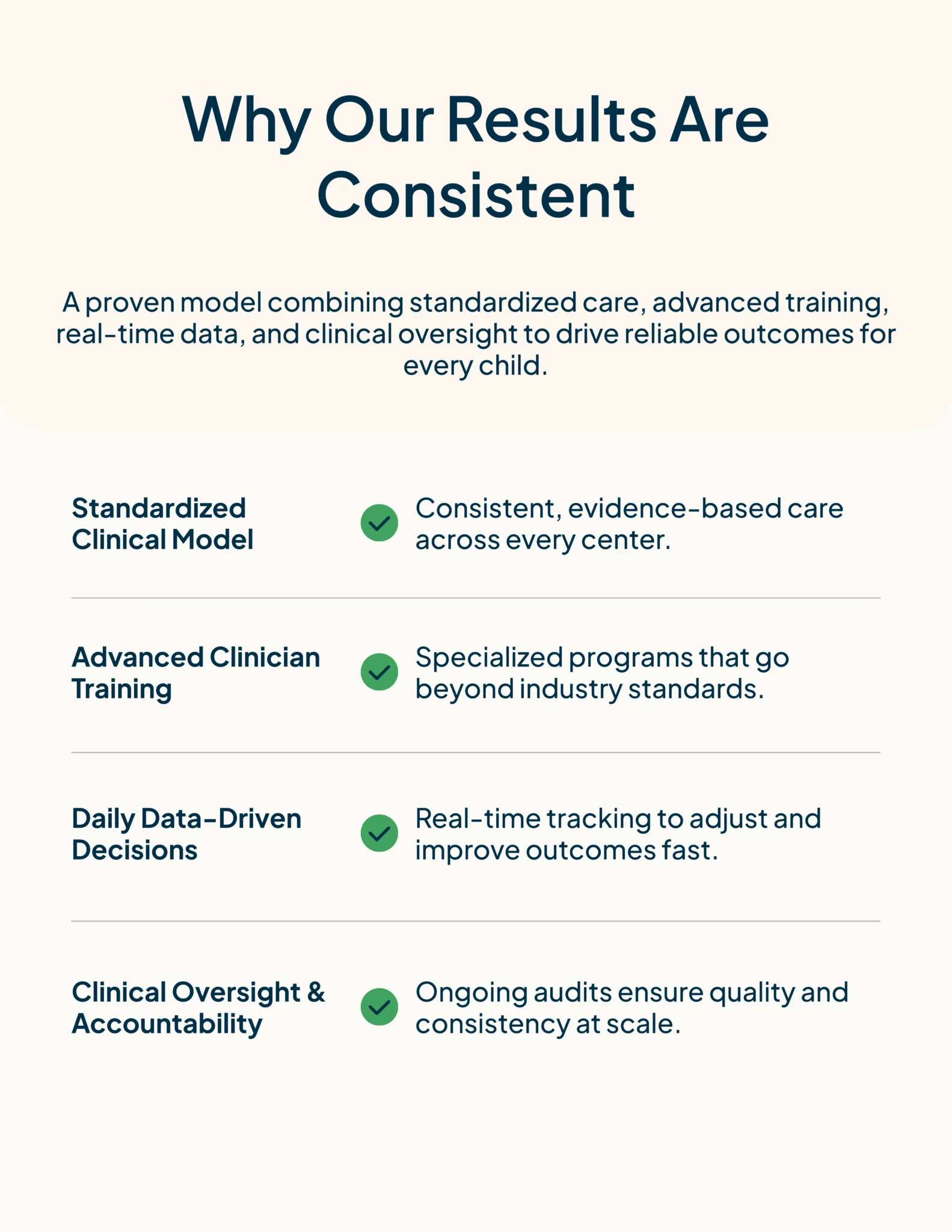
Consistent outcomes come from a consistent system. While every child’s plan is personalized, our clinical model is standardized across all centers. We use proven, research-based methods and well-trained clinicians. We track progress in real time and provide ongoing supervision. This helps ensure consistent, high-quality care. The result: progress you can rely on – no matter where your child receives therapy.

Common Questions About ABA Therapy

Many children begin to show measurable progress within the first 6 months of therapy. Early improvements often appear in communication, behavior, and daily routines.

From there, progress continues to build over time. The exact timeline varies by child, but consistent therapy and a personalized approach help create steady, meaningful growth.

ABA therapy focuses on the skills children use every day.

This typically includes communication, social interaction, and daily living abilities. That can look like expressing needs more clearly, engaging with others, or becoming more independent in routines at home.

The goal isn’t just skill acquisition – it’s helping children function more confidently in real-life situations.

Yes. ABA therapy is one of the most widely researched and evidence-based approaches for children with autism.

Decades of research, along with real-world outcomes data, show that it can lead to meaningful improvements when therapy is individualized and delivered consistently.

Progress is measured using structured, standardized tools along with ongoing clinical evaluation.

At Behavioral Innovations, we use the Vineland Adaptive Behavior Scales (Vineland-3), which tracks how children function in everyday life – not just during therapy sessions.

This allows us to see real changes in communication, social skills, and daily living abilities over time.

Early childhood is a critical period for learning and development.

Children who begin therapy earlier often build foundational skills faster, which can lead to stronger long-term outcomes. Early gains tend to create momentum that continues over time.

That said, progress is still possible at any age – starting earlier simply increases the opportunity for larger gains.

Let’s Talk About What Progress Could Look Like

Every child’s journey is unique, but meaningful progress is possible with the right support. We’ll help you understand what to expect, how therapy works, and how to get started.

Schedule a Consultation

Disclaimer: This outcomes study is based on a retrospective analysis of children receiving ABA therapy at Behavioral Innovations. Results reflect average changes measured using the Vineland Adaptive Behavior Scales (Vineland-3) over 6–12 months. Individual results may vary based on factors such as age, baseline skill level, therapy intensity, and individual needs. While improvements observed were statistically and clinically meaningful, outcomes are not guaranteed and should not be interpreted as typical for every child.

Español