What to expect
Contact Us Today to Get Started
Your information below will help us instantly match you with one of our expert intake advocates.
Progress Happens Over Time
Children build skills step by step – Leading to greater independence at every stage.
How Long Does ABA Therapy Take to Work?
Every child is different – but progress doesn’t take years to begin.
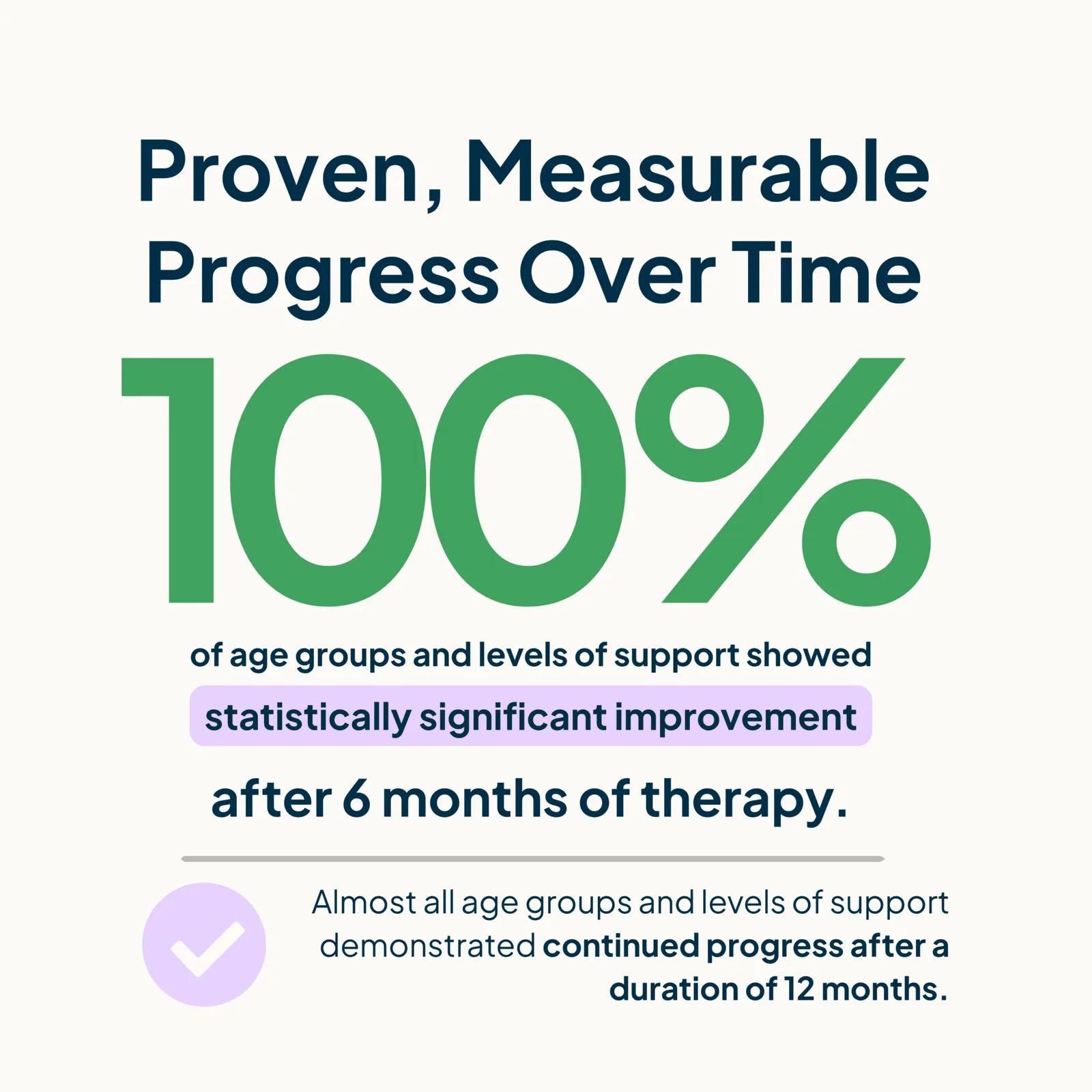
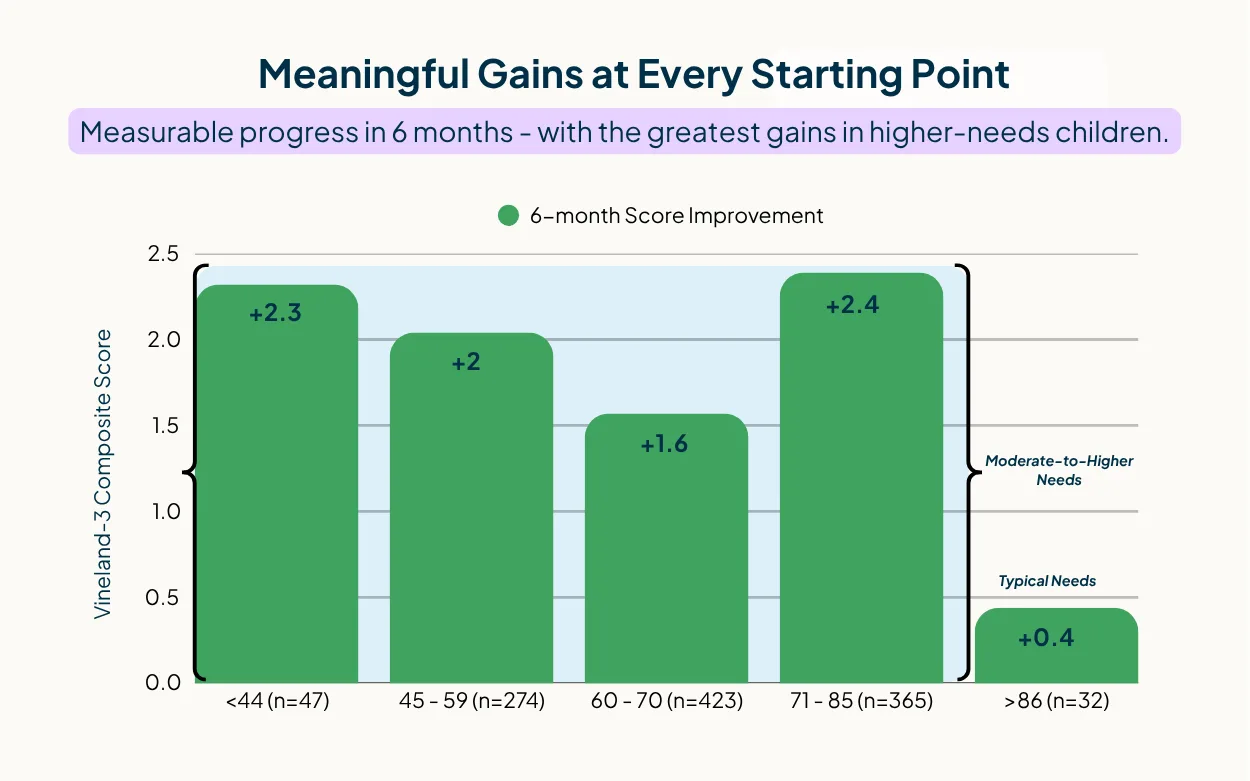
In our study of 1,141 children, we saw consistent, measurable progress across all starting points.
Children continue to build skills over time. Differences reflect pace of development, not whether progress is happening. Some children progress more quickly, while others build skills more steadily – but meaningful growth continues across every stage of development.
What Progress Looks Like Over Time
Children receiving ABA therapy showed:
- +1.95 average improvement after 6 months
- Continued progress to +1.98 by 12 months
- Consistent upward trajectory across key skill areas
These gains are considered:
- Clinically meaningful
- Statistically significant
- Observable in real-life behavior
What This Means for Your Child
Progress isn’t just numbers on a chart – it shows up in the moments that matter most at home, at school, and in everyday life.
Families often begin to notice meaningful changes like:
- More attempts to communicate
Whether it’s first words, clearer requests, or new ways to express needs, communication starts to open up – reducing guesswork and increasing connection. - Better ability to follow routines
Daily activities like getting dressed, transitioning between tasks, or following simple instructions become smoother and more predictable. - Increased engagement with others
Children may show more interest in playing, making eye contact, or interacting with siblings, parents, and peers – building the foundation for social relationships. - Reduced frustration or challenging behaviors
As communication and understanding improve, many children experience fewer meltdowns and less frustration, leading to a calmer, more positive environment.
These changes may start small, but they’re powerful. Each new skill builds on the last, creating momentum that accelerates over time. What begins as a single breakthrough often leads to broader independence, confidence, and long-term growth.

Measured Using Real-World Outcomes
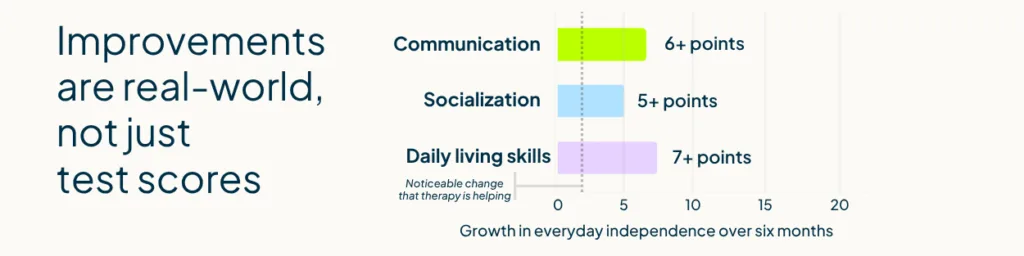
Progress is measured using the Vineland Adaptive Behavior Scales (Vineland-3) – a nationally recognized tool that tracks:
- Communication
- Social skills
- Daily living abilities
This ensures improvements reflect real-life function, not just in-session performance.
What Impacts Progress Speed?
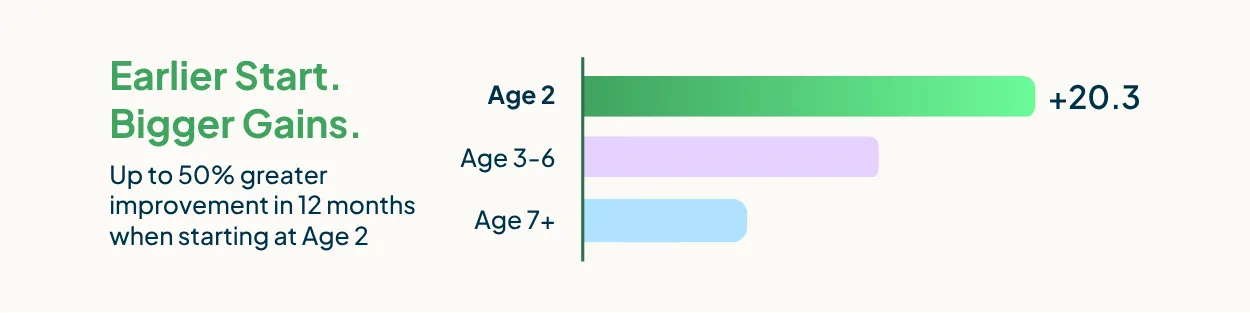
Several factors influence how quickly a child progresses:
- Age at start of therapy
- Level of support needed
- Consistency of therapy hours
- Individual learning style
The most important factor is starting early and staying consistent.
One of the biggest factors in outcomes is when therapy begins. Children who start earlier often see significantly larger gains.
View proven ABA therapy results
Let’s Talk About What Progress Could Look Like
Every child’s journey is unique – but meaningful progress is possible.
We’ll walk you through:
How progress is measured
What’s realistic for your child
Disclaimer: This outcomes study is based on a retrospective analysis of children receiving ABA therapy at Behavioral Innovations. Results reflect average changes measured using the Vineland Adaptive Behavior Scales (Vineland-3) over 6–12 months. Individual results may vary based on factors such as age, baseline skill level, therapy intensity, and individual needs. While improvements observed were statistically and clinically meaningful, outcomes are not guaranteed and should not be interpreted as typical for every child.