

Does ABA Therapy Work?

A child playing with a mother.Yes – when it’s personalized, consistent, and measured. Real outcomes show meaningful progress in as little as 6 months.
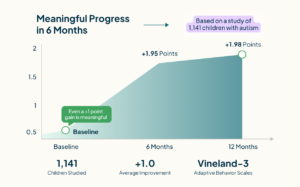
  • +1.95 improvement in 6 months
  • Measurable gains across key life skills
  • Results across ages and support needs

See What Progress Could Look Like for your child

What the Data Shows

Yes, ABA Therapy Works

aba outcomes progress barABA therapy is one of the most widely studied and evidence-based approaches for children with autism.


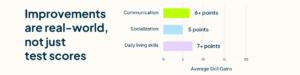
When done correctly, it helps children build meaningful skills in communication, social interaction, and daily living and independence

In our outcomes study of 1,141 children, most showed measurable improvement within the first 6 months, with continued progress over time.

Children receiving ABA therapy demonstrated:

  • +1.95 average improvement after 6 months
  • Continued gains through 12 months and beyond
  • Progress across communication, social, and daily living skills

What “Progress” Actually Looks Like

Progress isn’t always dramatic at first. It often starts with small, noticeable changes that build over time.

A child may begin to communicate needs more clearly. Routines become easier to follow. Interactions with parents and siblings become more consistent and less frustrating.

Over time, these changes compound. What starts as small progress becomes meaningful independence, stronger relationships, and more confidence in daily life.

What Makes ABA Therapy Effective?

ABA therapy works best when it’s done with intention and consistency. It’s not just about time in sessions. It’s about how therapy is designed and how progress is tracked.

Effective programs share a few core characteristics:

  • Treatment plans tailored to the individual child
  • Consistent therapy and reinforcement
  • Ongoing measurement and adjustment based on progress

When these elements come together, therapy becomes a structured path toward continuous improvement.

Starting Earlier Leads to Stronger Outcomes

One of the clearest patterns in the data is the impact of early intervention.

Children who begin therapy earlier tend to progress faster and achieve larger gains across key skill areas. Early therapy builds foundational skills at a time when learning happens more rapidly.

That doesn’t mean progress isn’t possible later – but it does mean timing can significantly influence outcomes.

Explore Early Intervention Results

How We Measure Whether Therapy Is Working

Progress is measured using the Vineland Adaptive Behavior Scales (Vineland-3), a nationally recognized assessment that evaluates how children function in everyday life.

It focuses on three areas:

  • Communication
  • Social skills
  • Daily living abilities

This allows us to track progress in a way that reflects real-world improvement, not just performance during therapy sessions.

See how we measure progress

a seamless pattern of white puzzle pieces on a black background

Not All ABA Therapy Is the Same

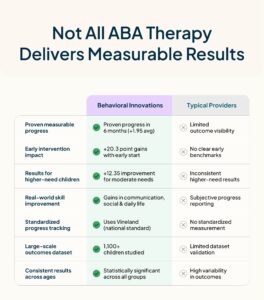
Not every provider measures progress the same way. In many cases, outcomes are based on observation rather than standardized tools. That makes it difficult for families to understand what’s working and what to expect. We believe progress should be clear, measurable, and transparent. Families deserve to see how therapy is helping their child grow.

Common Questions About ABA Therapy

Many children begin to show measurable progress within the first 6 months of therapy. Early improvements often appear in communication, behavior, and daily routines.

From there, progress continues to build over time. The exact timeline varies by child, but consistent therapy and a personalized approach help create steady, meaningful growth.

ABA therapy focuses on the skills children use every day.

This typically includes communication, social interaction, and daily living abilities. That can look like expressing needs more clearly, engaging with others, or becoming more independent in routines at home.

The goal isn’t just skill acquisition – it’s helping children function more confidently in real-life situations.

Yes. ABA therapy is one of the most widely researched and evidence-based approaches for children with autism.

Decades of research, along with real-world outcomes data, show that it can lead to meaningful improvements when therapy is individualized and delivered consistently.

Progress is measured using structured, standardized tools along with ongoing clinical evaluation.

At Behavioral Innovations, we use the Vineland Adaptive Behavior Scales (Vineland-3), which tracks how children function in everyday life – not just during therapy sessions.

This allows us to see real changes in communication, social skills, and daily living abilities over time.

Early childhood is a critical period for learning and development.

Children who begin therapy earlier often build foundational skills faster, which can lead to stronger long-term outcomes. Early gains tend to create momentum that continues over time.

That said, progress is still possible at any age – starting earlier simply increases the opportunity for larger gains.

Let’s Talk About What Progress Could Look Like

Every child’s journey is unique, but meaningful progress is possible with the right support. We’ll help you understand what to expect, how therapy works, and how to get started.

Schedule a consultation

Disclaimer: This outcomes study is based on a retrospective analysis of children receiving ABA therapy at Behavioral Innovations. Results reflect average changes measured using the Vineland Adaptive Behavior Scales (Vineland-3) over 6–12 months. Individual results may vary based on factors such as age, baseline skill level, therapy intensity, and individual needs. While improvements observed were statistically and clinically meaningful, outcomes are not guaranteed and should not be interpreted as typical for every child.

a seamless pattern of white puzzle pieces on a black background