

Every child is different – but progress doesn’t take years to begin.
In our study of 1,141 children, most showed measurable improvement within the first 6 months of therapy, with continued gains over time.
That means therapy isn’t just long-term investment – it starts delivering real, noticeable progress early in the process.
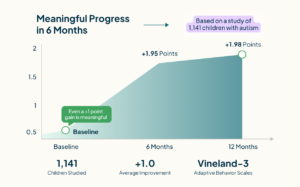 Children receiving ABA therapy showed:
These gains are considered:

Progress isn’t just numbers on a chart – it shows up in the moments that matter most at home, at school, and in everyday life.
Families often begin to notice meaningful changes like:
These changes may start small, but they’re powerful. Each new skill builds on the last, creating momentum that accelerates over time. What begins as a single breakthrough often leads to broader independence, confidence, and long-term growth.
Several factors influence how quickly a child progresses:
The most important factor is starting early and staying consistent.
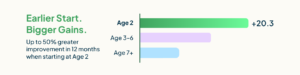
One of the biggest factors in outcomes is when therapy begins. Children who start earlier often see significantly larger gains.
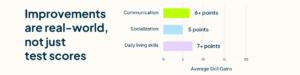 Progress is measured using the Vineland Adaptive Behavior Scales (Vineland-3) – a nationally recognized tool that tracks:
This ensures improvements reflect real-life function, not just in-session performance.
Every child’s journey is unique – but meaningful progress is possible.
We’ll walk you through:
Disclaimer: This outcomes study is based on a retrospective analysis of children receiving ABA therapy at Behavioral Innovations. Results reflect average changes measured using the Vineland Adaptive Behavior Scales (Vineland-3) over 6–12 months. Individual results may vary based on factors such as age, baseline skill level, therapy intensity, and individual needs. While improvements observed were statistically and clinically meaningful, outcomes are not guaranteed and should not be interpreted as typical for every child.