

Name: Hailee
Age at Start of ABA Therapy: 3.5
Primary Challenges: Significant speech delay; Not reaching developmental milestones
Hailee began Applied Behavioral Analysis (ABA) at three and a half years old. Before her diagnosis, she had already spent a year in speech and occupational therapy. Her mom started as a clinician with Behavioral Innovations in August 2020, and Hailee officially started services in 2022 at the Spring Cypress location in Texas.
Her mom chose Behavioral Innovations because she believed in their mission and knew ABA could help close developmental gaps quickly. When Hailee first arrived, she spoke very little, just single-word approximations and a few signs. She had picked up a handful of words from speech therapy, but communication was still a major challenge. She wasn’t yet potty trained at the start of ABA, but within a few months, just before her fourth birthday, he was fully potty trained. From there, her words began to grow, and for the first time, they were functional and meaningful.
Transitions were tough early on, and denied access led to moderate but consistent behaviors. Her parents had tried a Mother’s Day Out program, but she wasn’t able to continue past three years old because she wasn’t potty trained. With her dad working from home, the family had some flexibility, but they knew she needed structure. Behavioral Innovations became that structure.
As her days became more predictable and supportive, her skills blossomed. She began to generalize across people and settings, and her family chose to pause speech and Occupational Therapy (OT) to focus fully on intensive ABA therapy for about a year. They reintroduced speech therapy in 2023, but transitions became difficult again, so ABA remained the priority for building daily living skills and stability.
In the beginning, scripting and rigidity showed up often. But little by little, ABA helped open doors in communication, flexibility, and independence.
As Hailee approached school age, her clinical team noticed some new patterns: more rigidity, less flexibility during transitions, and some anxieties about changes in her routine. The team pivoted their plan to embed naturalistic goals that would prepare her for classroom success. They focused on teaching how to wait, take turns, and flexibility.
Her team also began tailoring sessions to increase attention to task, helping her prepare for the demands of a school day. Through strategies like video modeling, something Hailee naturally gravitated toward, they were able to teach new skills in a way that felt fun and familiar.
Today, Hailee speaks in full sentences. While grammar can still be tricky, she communicates her wants, needs, and ideas clearly.
With the help of her therapy team, she was able to build the attention and group participation skills she needed to succeed in class. She’d watch YouTube routines at home and dance in front of the mirror, picking up choreography quickly.
Hailee’s growth wasn’t just seen in the clinic or at home – it was seen on the dance floor. She has enrolled in a hip-hop dance class, and her family has been delighted to watch her light up when she dances. Her social motivation has grown, and while she once struggled to appropriately initiate social interactions, she now approaches peers a little softer and with greater success.
One of the most powerful parts of Hailee’s journey was the transformation within her family. Her father, who initially wasn’t sure how to best support Hailee, learned new ways to interact with her and understand her needs. For her mom, the challenge was different. She needed to learn when to take off the clinician hat and simply be “Mom.” Behavioral Innovations created a space where she could trust the team and feel safe doing just so.
In the early days, Hailee didn’t have the words to ask a peer to play. She would walk up and start playing without warning, which sometimes confused other children. With practice, she learned to use phrases like “come on” and “play with me.” Her natural social spirit began to thrive as her communication caught up.
The clinic’s teamwork approach made a difference too. Hailee watched the therapists support each other and eventually began doing the same thing. She started handing peers their dropped cups, offering hugs when someone was sad, and making sure her BCBA had everything they needed to move to the next activity.
Hailee’s BCBA saw what motivated her, especially through video modeling, and used those strengths to teach her new skills in natural contexts. Her story underscores a message her family wants others to hear: the earlier, the better.
Early intervention, especially around communication, can completely reshape a child’s trajectory. Those 30–40 hours a week may sound intimidating, but investing time when children are little and learning rapidly, opens doors that last a lifetime.
Hailee transitioned from full-time ABA to a combined schedule with school; she did two days at school and three days at Behavioral Innovations. She started in a co-teach classroom and now attends general education kindergarten with in-class support.
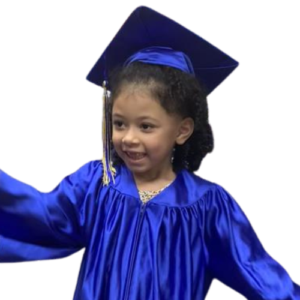
Parental collaboration matters deeply in ABA. Progress is faster and stronger when families practice skills at home and stay in sync with the therapy team. Hailee’s parents were fully engaged. They attended every parent collaboration session during her two and a half years with Behavioral Innovations. Together, the team selected goals and generalized them for real life.
When visual supports helped Hailee at the clinic, the family used them in the community too. Their involvement, consistency, and trust helped Hailee build the independence, confidence, and communication she needed to graduate from services successfully.
Disclaimer: Client testimonials have not been initiated by, associated with, or endorsed by any Board-Certified Behavior Analyst® (BCBA®). Feedback is entirely voluntary and does not impact treatment. Client photos have been obtained per written consent of the parent/guardian.