Muchos niños comienzan a mostrar avances cuantificables en los primeros seis meses de terapia. Las primeras mejoras suelen manifestarse en la comunicación, el comportamiento y las rutinas diarias.
Contáctenos Hoy Para Empezar
Su información nos ayudará a conectarle de inmediato con uno de nuestros especialistas en admisión.
Sí, la terapia ABA ayuda a los niños a desarrollar habilidades para la vida cotidiana con El Paso del tiempo, lo que les permite alcanzar una mayor independencia.
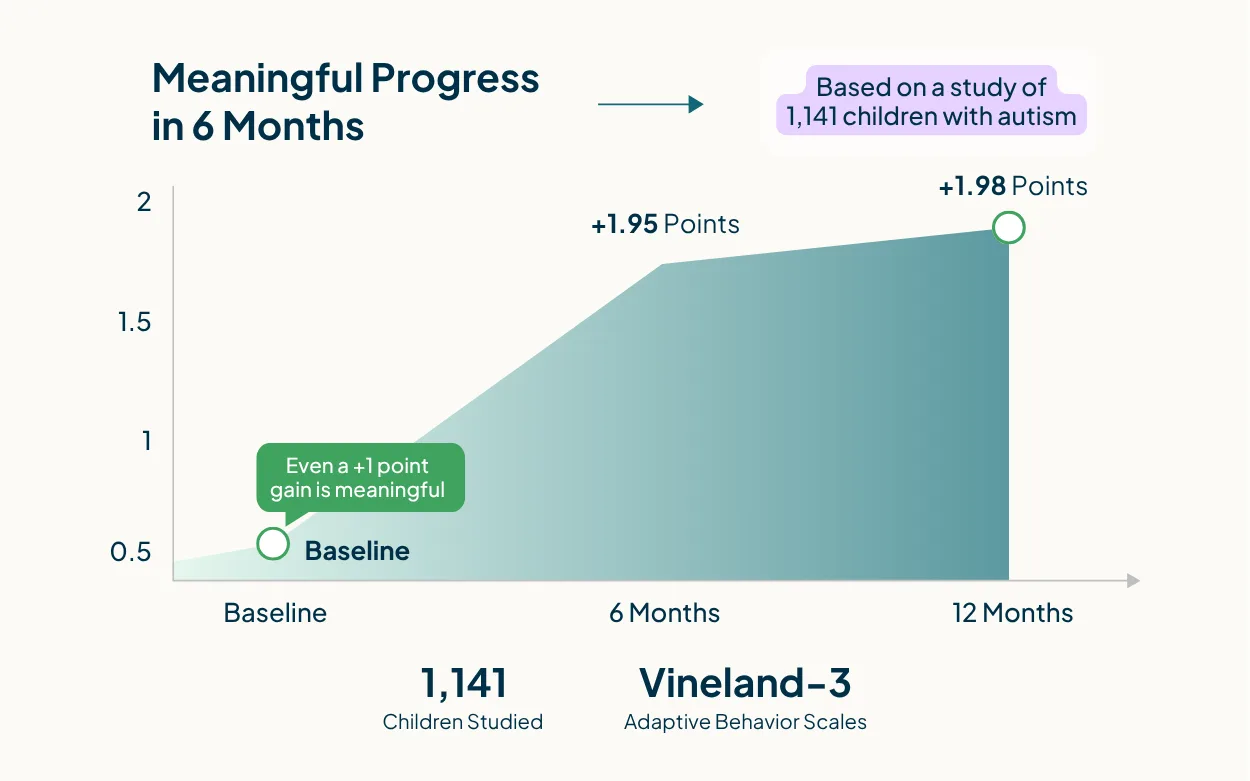
En Behavioral Innovations, nuestro estudio interno de resultados, realizado con 1.141 niños, muestra una mejora cuantificable en los primeros seis meses, con un progreso continuo a lo largo del tiempo.
- Mejora media de +1,95 tras 6 meses
- Mejoras continuadas a los 12 meses y más allá
- Progreso en las habilidades de comunicación, sociales y de la vida cotidiana
No se trata solo de cifras: reflejan cambios significativos en la vida cotidiana.
Lo que realmente muestran los datos
La terapia ABA produce un progreso cuantificable y constante cuando se aplica de forma estructurada y coherente.
En nuestros datos sobre resultados:
- La mayoría de los niños mejoraron en los primeros 6 meses
- Las ganancias se mantuvieron más allá de los 12 meses
- Se observó un avance en todos los puntos de partida y niveles de apoyo
El progreso no es inmediato, pero sí es predecible y se va consolidando con el tiempo.
Cómo es realmente el «progreso»
El progreso en la terapia ABA no empieza con grandes hitos. Empieza con pequeños cambios significativos:
- Un niño que pide lo que necesita
- Seguir rutinas sencillas con mayor autonomía
- Menos momentos de frustración
- Mayor interacción con la familia y los compañeros
Con el tiempo, estas pequeñas ganancias se acumulan y dan lugar a:
- Mayor independencia
- Relaciones más sólidas
- Más confianza en el día a día

¿Qué hace que la terapia ABA sea eficaz?
La terapia ABA da mejores resultados cuando se lleva a cabo con determinación y constancia. No se trata solo del tiempo que se dedica a las sesiones, sino de cómo se diseña la terapia y cómo se realiza el seguimiento de los progresos.
Los programas eficaces comparten algunas características fundamentales:
- Planes de tratamiento adaptados a cada niño en particular
- Terapia y refuerzo constantes
- Evaluación y ajuste continuos en función de los avances
Cuando estos elementos se combinan, la terapia se convierte en un camino estructurado hacia la mejora continua.
Empezar antes da mejores resultados
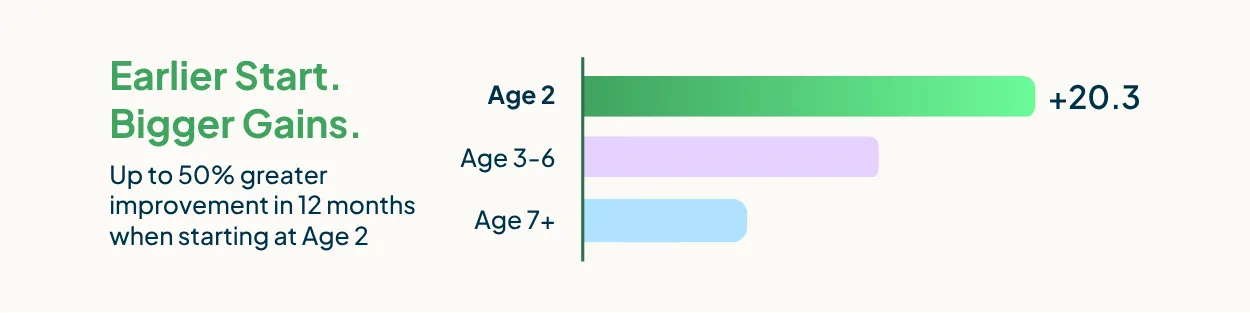
Una de las tendencias más evidentes que se desprenden de los datos es la efectos de la intervención temprana.
Los niños que comienzan la terapia a una edad más temprana suelen progresar más rápido y lograr mayores avances en áreas clave de habilidades. La terapia temprana permite desarrollar las habilidades básicas en una etapa en la que el aprendizaje se produce con mayor rapidez.
Eso no significa que no sea posible avanzar más adelante, pero sí que el momento elegido puede influir de manera significativa en los resultados individuales.
Cómo evaluamos si la terapia está dando resultados
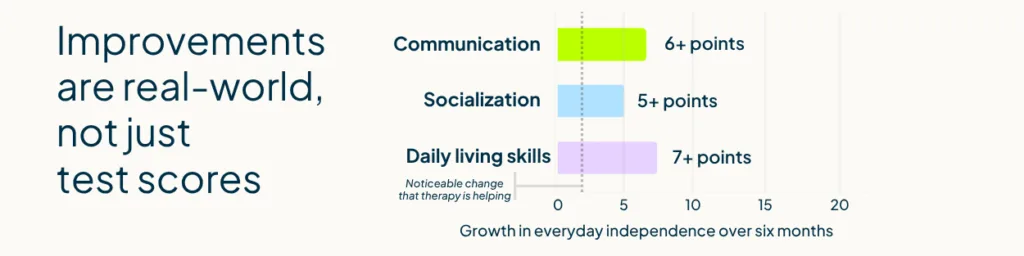
El progreso se mide mediante las Escalas de Comportamiento Adaptativo de Vineland (Vineland-3), una prueba reconocida a nivel nacional que evalúa cómo se desenvuelven los niños en la vida cotidiana. Esto nos permite hacer un seguimiento del progreso de una forma que refleje la mejora en la vida real, y no solo el rendimiento durante las sesiones de terapia.
Diseñado para lograr un progreso constante y cuantificable
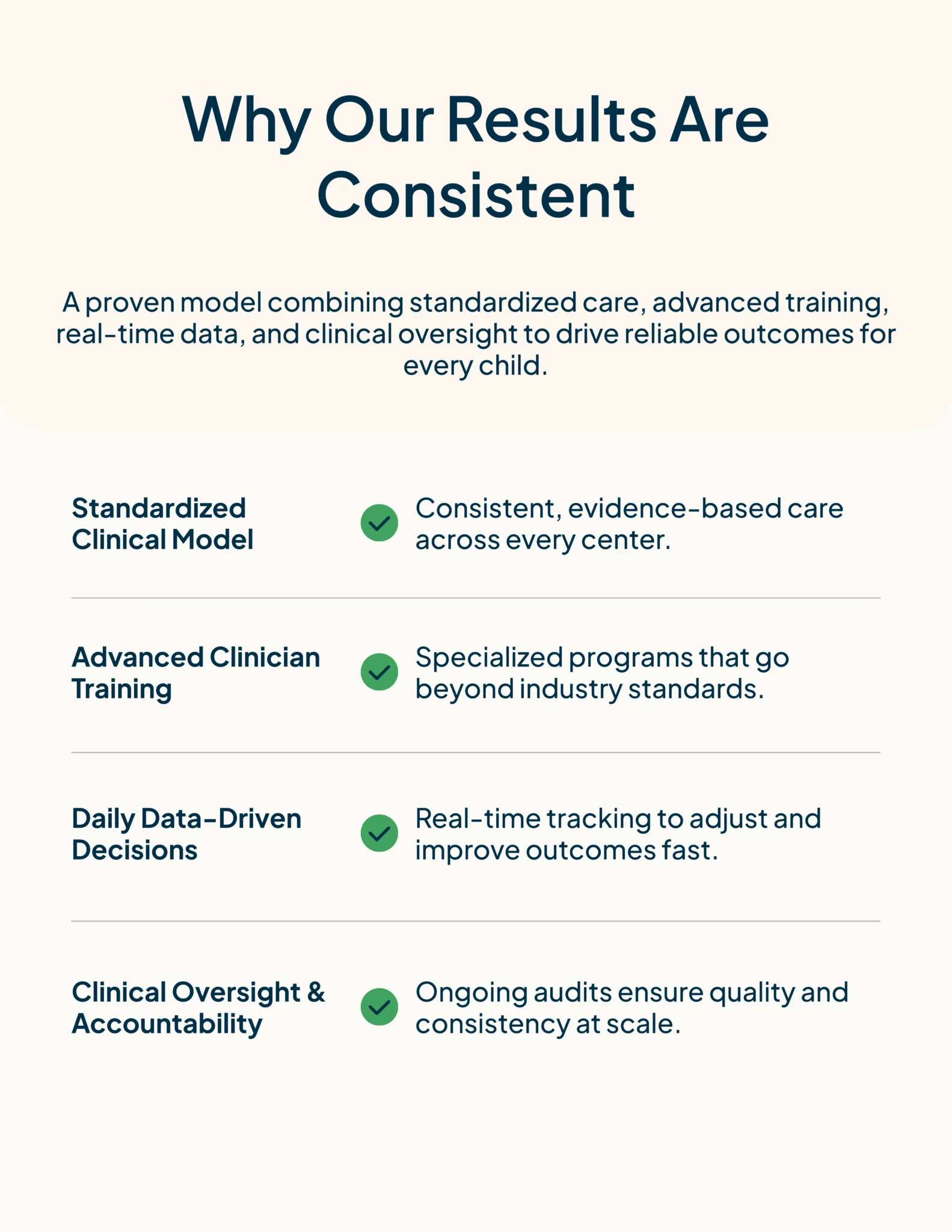
Los resultados consistentes son fruto de un sistema coherente. Aunque el plan de cada niño es personalizado, nuestro modelo clínico está estandarizado en todos los centros. Utilizamos métodos contrastados y basados en la investigación, y contamos con profesionales clínicos bien formados. Realizamos un seguimiento del progreso en tiempo real y ofrecemos supervisión continua. Esto ayuda a garantizar una atención coherente y de alta calidad. El resultado: un progreso en el que puedes confiar, independientemente del lugar en el que tu hijo reciba la terapia.
Preguntas frecuentes sobre la terapia ABA
Hablemos de cómo podría ser ese progreso
El proceso de cada niño es único, pero con el apoyo adecuado es posible lograr avances significativos. Te ayudaremos a comprender qué puedes esperar, cómo funciona la terapia y cómo dar los primeros pasos.
Aviso legal: Este estudio de resultados se basa en un análisis retrospectivo de niños que recibieron terapia ABA en Behavioral Innovations. Los resultados reflejan los cambios medios medidos mediante las Escalas de Comportamiento Adaptativo de Vineland (Vineland-3) a lo largo de un periodo de entre 6 y 12 meses. Los resultados individuales pueden variar en función de factores como la edad, el nivel de habilidades inicial, la intensidad de la terapia y las necesidades individuales. Aunque las mejoras observadas fueron estadísticamente y clínicamente significativas, los resultados no están garantizados y no deben interpretarse como representativos de todos los niños.