Contáctenos Hoy Para Empezar
Su información nos ayudará a conectarle de inmediato con uno de nuestros especialistas en admisión.

Los niños que empiezan antes suelen progresar más rápidamente, aunque el crecimiento continúa a cualquier edad.
Los niños que comenzaron la terapia ABA a una edad más temprana mostraron los mayores avances, pero se observaron progresos significativos en todas las edades.
Por qué es importante empezar pronto

La primera infancia es una etapa clave para el aprendizaje.
Durante esta etapa, el cerebro tiene una mayor capacidad de adaptación, lo que facilita el desarrollo de habilidades básicas como la comunicación, la interacción social y las rutinas diarias.
Aunque nuestro estudio sobre los resultados muestra que los niños que comienzan la terapia antes experimentan un progreso más sólido y rápido, los niños de todas las edades siguen logrando avances significativos.
Estos resultados se deben a un modelo clínico coherente y basado en datos que se adapta a las necesidades de cada niño.
El impacto de la intervención temprana
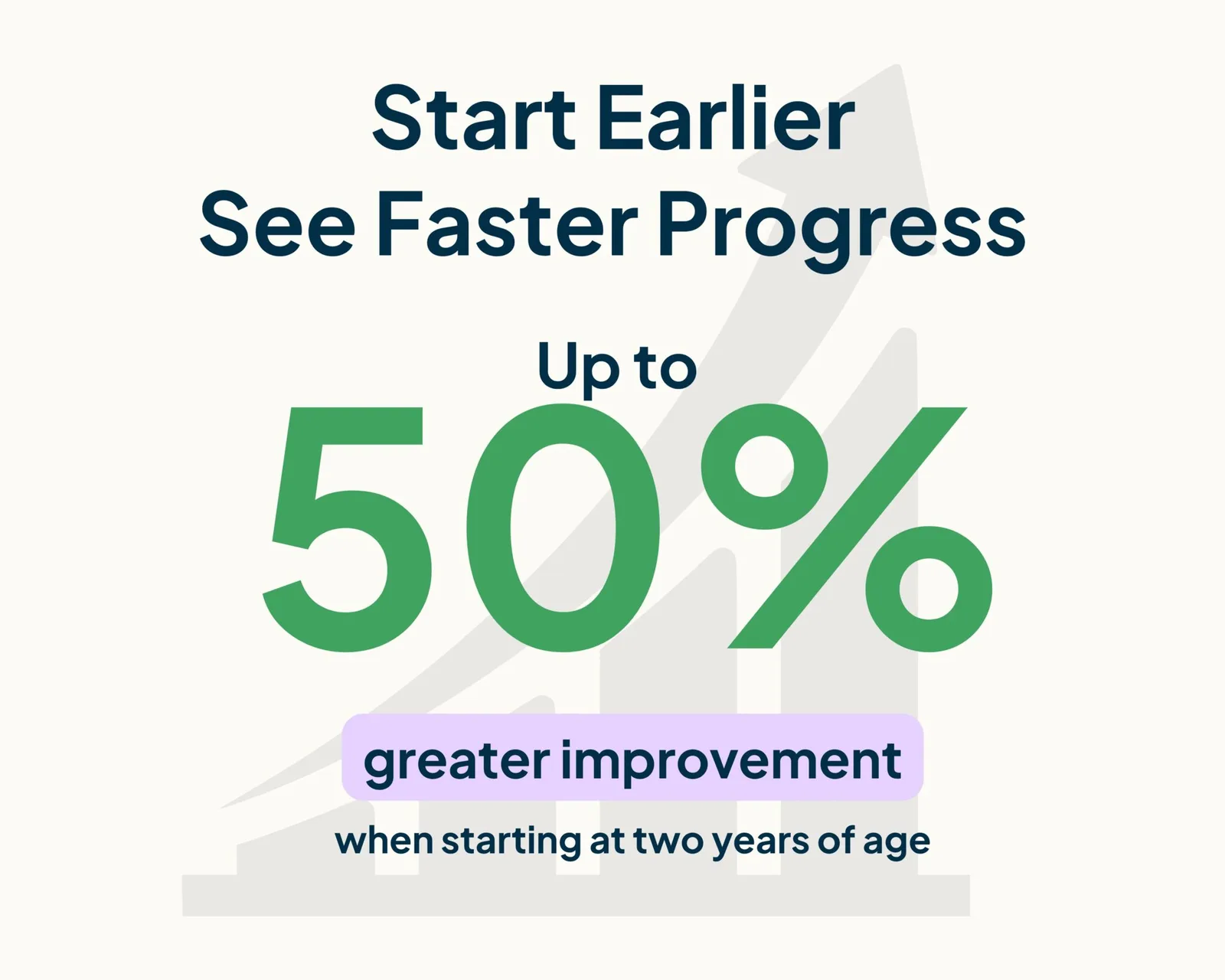
Los niños que comienzan la terapia ABA a una edad más temprana muestran una mejora considerablemente mayor en las habilidades fundamentales para la vida.
En nuestro estudio de resultados realizado con la Escala de Vineland:
- Mejora media de +20,3 en los niños que comenzaron a los 2 años
- Mejoras moderadas en los niños que comienzan entre los 3 y los 6 años
- Avances significativos para los niños que empiezan a edades más avanzadas
Los primeros avances no solo se producen más rápido, sino que crean una base más sólida sobre la que los niños siguen construyendo con el paso del tiempo.
El progreso es una realidad, independientemente de dónde empieces
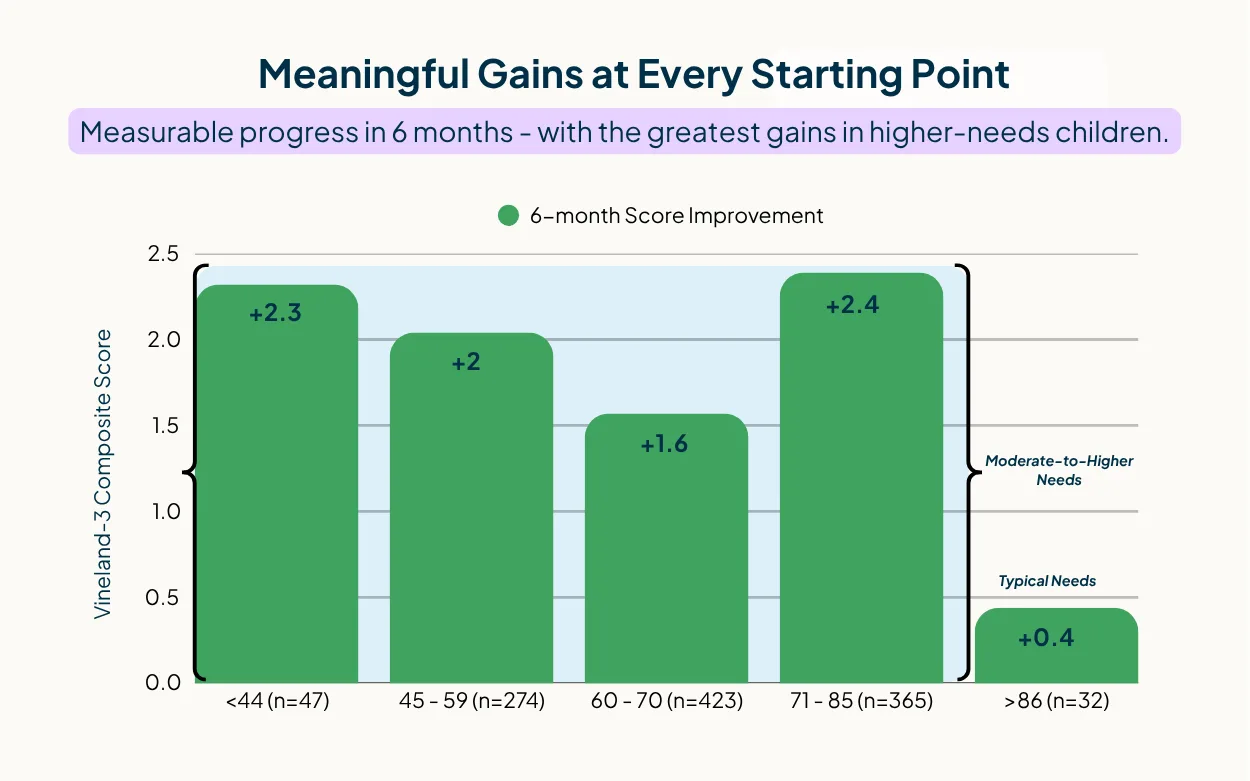
Los niños adquieren habilidades para la vida real en tan solo 6 meses, independientemente de su nivel de necesidad.
Qué significa esto
- Todos los niños pueden progresar
- Los mayores logros suelen partir de una mayor necesidad
- Los pequeños cambios conducen a una independencia real
Descubre cómo medimos el progreso
¿Es demasiado tarde para empezar?
No, nunca es demasiado tarde para empezar.
Aunque una intervención temprana es la que ofrece mejores resultados, los niños de todas las edades pueden lograr avances significativos y cuantificables con la terapia ABA.
Los niños mayores pueden avanzar a un ritmo diferente, centrarse en otras áreas de habilidades o desarrollar habilidades más avanzadas o funcionales. Pero la mejora sigue siendo muy posible.
Lo más importante es:
- Partiendo del punto en el que se encuentra tu hijo hoy
- Elaborar un plan adaptado a sus necesidades
- Mantener la coherencia a lo largo del tiempo
El progreso no tiene fecha de caducidad: empieza en el momento en que te pones en marcha.
Consulta los resultados contrastados de la terapia ABA
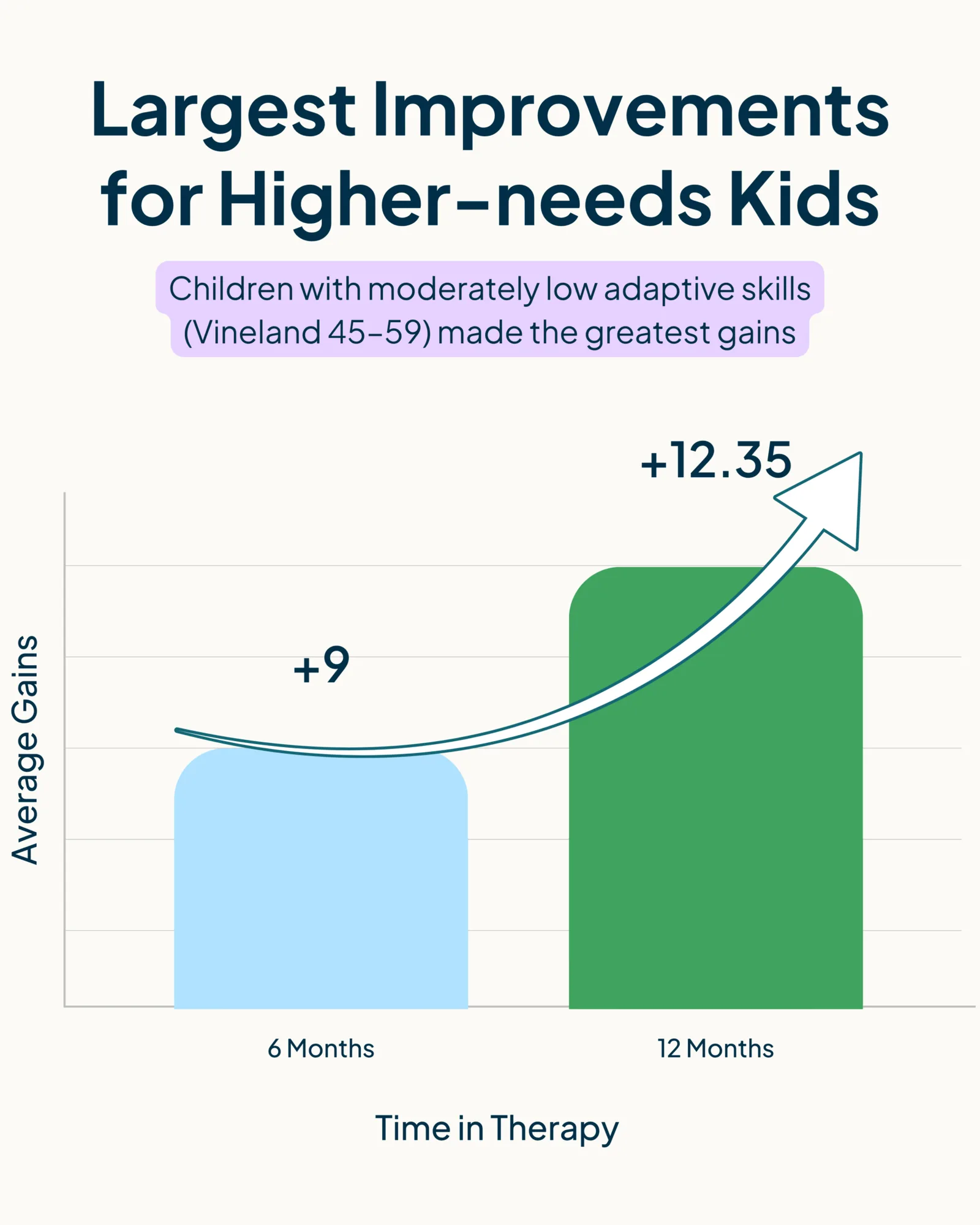
Cómo se manifiestan los primeros avances

El progreso no se mide solo en cifras: es lo que las familias empiezan a notar en su día a día.
Iniciar la terapia ABA a una edad temprana puede dar lugar a:
- Las primeras palabras o una comunicación más fluida
- Mayor implicación de los padres, hermanos y cuidadores
- Mayor independencia en las rutinas diarias
- Menos frustración y menos conductas problemáticas
Estos momentos pueden parecer insignificantes al principio, pero se van sumando rápidamente.
Con el tiempo, los primeros avances ayudan a los niños a:
- Fomentar la confianza
- Fortalecer las relaciones
- Llevar una vida cotidiana con mayor autonomía
Estos primeros avances suelen sentar las bases para un crecimiento a largo plazo.
Hablemos de cómo podría ser ese progreso
El recorrido de cada niño es único, pero es posible lograr avances significativos.
Te guiaremos paso a paso por:
- Qué puedes esperar
- Cómo se mide el progreso
- ¿Qué es lo más realista para tu hijo?
Aviso legal: Este estudio de resultados se basa en un análisis retrospectivo de niños que recibieron terapia ABA en Behavioral Innovations. Los resultados reflejan los cambios medios medidos mediante las Escalas de Comportamiento Adaptativo de Vineland (Vineland-3) a lo largo de un periodo de entre 6 y 12 meses. Los resultados individuales pueden variar en función de factores como la edad, el nivel de habilidades inicial, la intensidad de la terapia y las necesidades individuales. Aunque las mejoras observadas fueron estadísticamente y clínicamente significativas, los resultados no están garantizados y no deben interpretarse como representativos de todos los niños.